
Our kids: where and why they work
Masr Bokra’s work focuses on the Arab Abou Saed area, 40km south of Cairo, Egypt. The area is known for its 300 brick manufacturing plants, which are situated on tracts of desert where young men and boys as young as 5 work for 12 hours a day in temperatures of over 40 °C. The children are from poor families from Upper Egypt who find themselves in a position where they have to send their sons to work in order to survive. Lack of education and employment opportunities mean that there is often no other option.
The work varies from moulding and drying bricks to moving them manually or by cart into and out of large kilns. Burns and other serious injuries are common. The factory owners are often off-site, and there is no health and safety equipment provided. After working for 12 hours a day in these dangerous conditions, the boys sleep in badly-built concrete shacks resembling stables. The rooms are unlit and lack beds or bedding. The boys share these buildings with men working at the site. Some children have reported sexual abuse. To avoid sleeping in these conditions, workers sometimes sleep outside, wrapped in the plastic sheeting used to package the building materials. Deaths from suffocation are common.
Breaking the cycle
The long hours of exposure to the scorching sun, the poor quality of drinking water, sanitation, and nutrition result in poor health for all workers. The absence of efficient clinics and affordable primary care worsens the health situation. The workers are poorly paid, even by Egyptian standards, earning on average 7-15 Egyptian pounds a day, and are consequently trapped in a cycle of poverty. Additionally, children who are sent to work at a young age are unable to continue their education and will therefore miss out on opportunities to improve their own lives.
We hope that by improving living and working conditions and providing opportunities for education, we will be able to help break this cycle of poverty, poor health and lack of education. Our interventions aim to give the children other options in life, as well as improving their immediate situation. In the long run, we hope to convince more factory owners of the value of respecting their workforce, and to safeguard future generations from the dangers they face.
This 2008 New York Times article paints a vivid picture of the brickmaking area. Read it here.
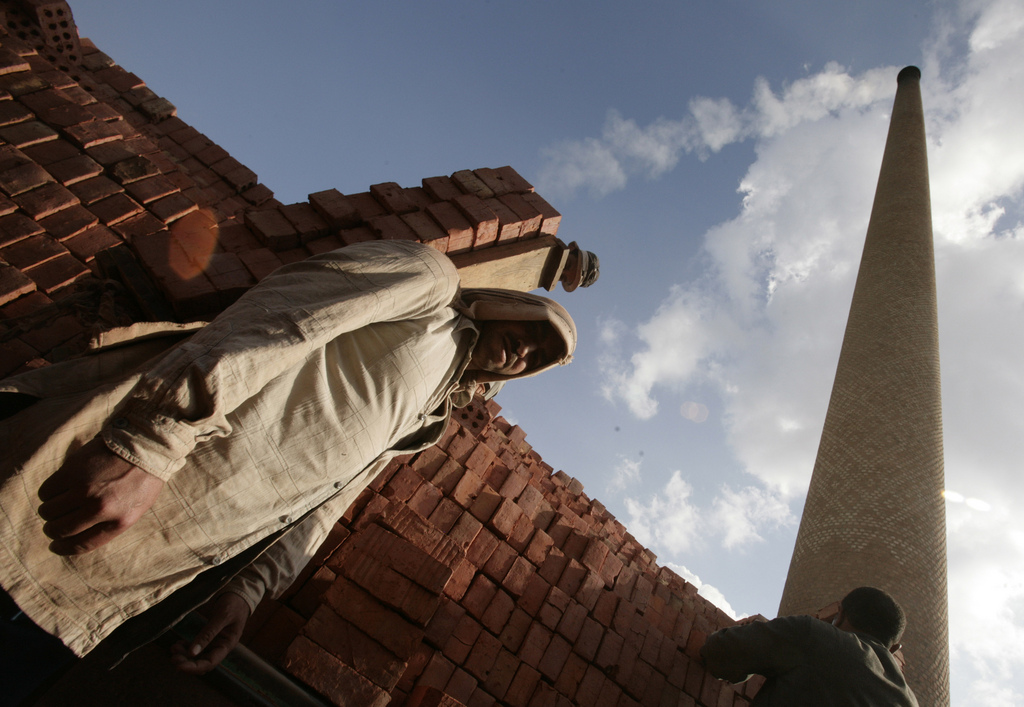
Picture: Nasser Nouri (License)
 Masr Bokra